Mylar Hippo for Christmas
A Sparkling, Whimsical Touch for Holiday Handmade Goods
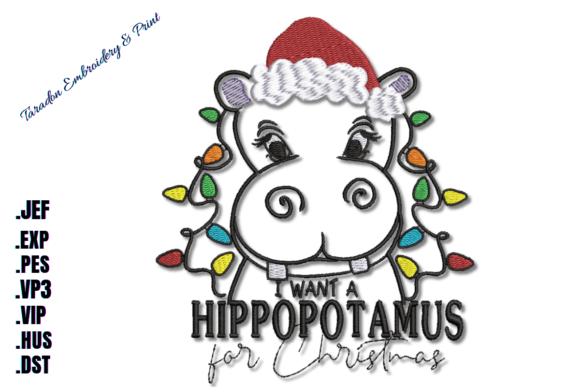
As an embroidery designer who’s stitched thousands of holiday projects—from Etsy bestsellers to boutique nursery collections—I approached Mylar Hippo for Christmas with cautious optimism. It’s not every day a design promises both charm and shimmer without leaning into cliché. The first thing that stands out is its joyful restraint: a plump, friendly hippo wearing a tiny Santa hat and scarf, rendered in clean, confident lines—not overly detailed, but full of personality. The Mylar integration isn’t just decorative flair; it’s a structural choice. That metallic layer sandwiched between thread layers creates subtle light-catching dimension—ideal for pieces meant to feel special, not mass-produced.
Fits Naturally Into Real-World Projects
This isn’t a “wall-hanger only” design. Mylar Hippo for Christmas has clear project instincts. I tested it on a heavyweight organic cotton tote bag first—its scale and balance held up beautifully at 4.2 inches wide. It also translated well onto a loopback cotton sweatshirt (medium-weight), where the Mylar glint softened slightly but remained visible under ambient light. For baby blankets and kitchen towels, I resized it down to 3.1 inches: still legible, still charming, and the satin-stitched contours stayed crisp. On curved surfaces like caps, I recommend stitching it on the front panel only—avoiding the crown seam—and using a tear-away + cut-away stabilizer combo to prevent puckering around the dense fill areas near the hippo’s belly and hat brim.
Performance Notes Across Fabric Types
On dark fabric—like navy twill or charcoal fleece—the Mylar really sings. Paired with high-contrast thread (e.g., white or pale gold), the sparkle reads clearly even in indoor lighting. On light fabrics, I suggest testing thread colors carefully: a warm cream satin stitch with silver Mylar gives richer depth than stark white. With stretchy knits, keep stitch density in mind—Mylar Hippo for Christmas uses moderate fill and thoughtful running stitch accents, so it doesn’t overwhelm delicate weaves. That said, always run a test on scrap first. Pay special attention to the tiny scarf tassel and the Santa hat’s pom-pom: these are small, layered details that can blur if tension or stabilizer isn’t dialed in.
Where It Shines—and Where to Pause
- Tote bag design: Excellent visual weight and gift-ready appeal. Holds up after repeated washing when secured with quality thread and stabilizer.
- Sweatshirt embroidery: Works best on mid-to-heavyweight fleece. Avoid ultra-thin French terry unless adding extra backing.
- Embroidered patch: Ideal candidate—clean edges, minimal underlay, and the Mylar adds instant perceived value.
- Baby items & nursery decor: Soft, non-abrasive finish. Confirm Mylar is fully encapsulated per safety guidelines before finalizing for infant use.
- Caps & curved surfaces: Use a smaller hoop size (ideally 4x4") and stabilize aggressively. Skip the bill area—stick to flat front panels.
- Kitchen towels & aprons: Highly durable. The design’s compact shape avoids high-friction zones like hems or seams.
Impact on Your Handmade Business
For Etsy sellers and craft fair vendors, Mylar Hippo for Christmas elevates perceived value without raising production complexity. Customers notice the shimmer in product photos—it translates well to printable mockups, especially lifestyle shots with natural light. That visual distinction helps listings stand out in crowded seasonal feeds. From a branding perspective, it’s versatile enough to pair with your existing color palette (think forest green, terracotta, cream) without demanding full collection overhauls. As a personalized gift option—say, stitched onto a custom pillow cover with a child’s name—it balances playfulness and polish, reinforcing buyer trust in your craftsmanship.
Practical Embroidery Prep Checklist
- Always verify the embroidery file format compatibility with your machine before downloading from Creative Fabrica.
- Check the listed hoop size—Mylar Hippo for Christmas is likely optimized for common 4x4" or 5x7" hoops, but confirm on the product page.
- Run a test stitch on fabric identical to your final project, using your intended thread colors and stabilizer stack.
- Compare how the Mylar effect reads on both light and dark fabric swatches—lighting and thread contrast dramatically affect visibility.
- Inspect small features post-stitch: the scarf stripe, hat trim, and eye detail should remain distinct, not fused or fuzzy.
- Review the licensing terms on the Creative Fabrica product page—especially if planning commercial embroidery or resale of finished products.
Final Thoughts for Designers and Makers
Mylar Hippo for Christmas isn’t flashy for flashiness’ sake. Its strength lies in intentionality: a cheerful motif, smart Mylar placement, and balanced stitch density that supports real-world wear and wash. It fits seamlessly into a broader holiday collection without competing for attention—making it a reliable workhorse for custom apparel, embroidered patches, and handmade gifts alike. If you’re curating digital embroidery files for sale or building a seasonal product line, this design earns its place not as novelty, but as a quietly confident, commercially viable asset. Just remember: let the Mylar do the talking—keep thread choices clean, stabilizer choices deliberate, and always test before committing to the final piece.