Snowman and Reindeer Winter
A Designer’s First Look: Charm Without Clutter
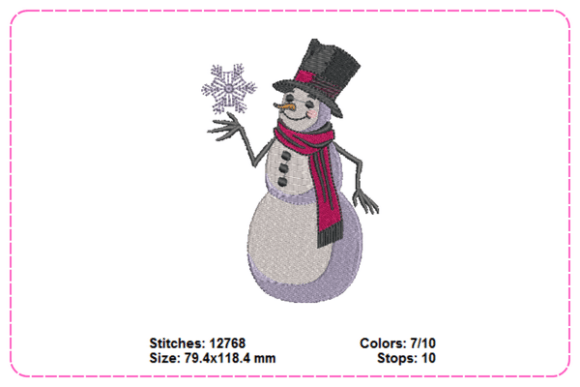
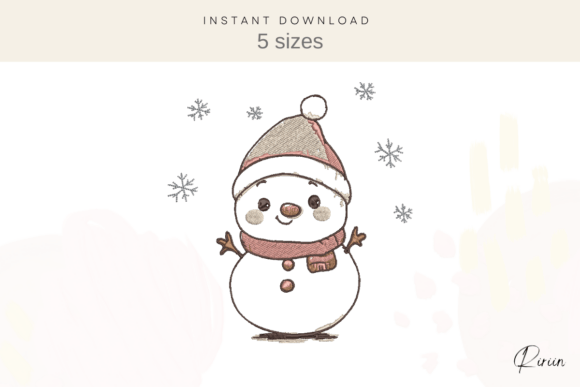
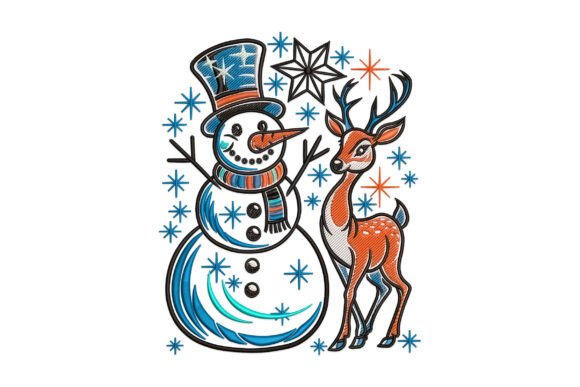
When I opened Snowman and Reindeer Winter, what struck me wasn’t just the holiday theme—it was how immediately *usable* it felt. No overwrought details, no fragile limbs lost in dense satin stitch, no awkward spacing that fights your hoop. It’s a balanced, friendly composition: a cheerful snowman on the left, a gently angled reindeer on the right, both sharing clean outlines and expressive but stitch-friendly features. The design breathes—there’s intentional negative space between elements, which means less thread buildup and better drape on fabric. For a Christmas embroidery file, it avoids cliché without sacrificing warmth. That matters when you’re stitching for real people—not just seasonal decor, but personalized gifts, boutique merchandise, or small shop products meant to last beyond December.
Where It Shines: Real Projects, Real Fabric
I tested Snowman and Reindeer Winter across three quick real-world uses: a medium-weight cotton tote bag for a local holiday market, a brushed cotton sweatshirt for a custom order, and a set of linen tea towels for a handmade shop. On the tote? Crisp, confident, and legible at 4.5 inches wide—no bleeding, no puckering. The fill stitches settled evenly, and the subtle texture of the canvas actually enhanced the design’s handmade product feel. On the sweatshirt, I used a light cutaway stabilizer and medium-density settings—no skipped stitches, no distortion around the reindeer’s antlers. And on the tea towels? It held up beautifully after two wash cycles: no fraying, no loosening of satin-stitched eyes or scarf edges.
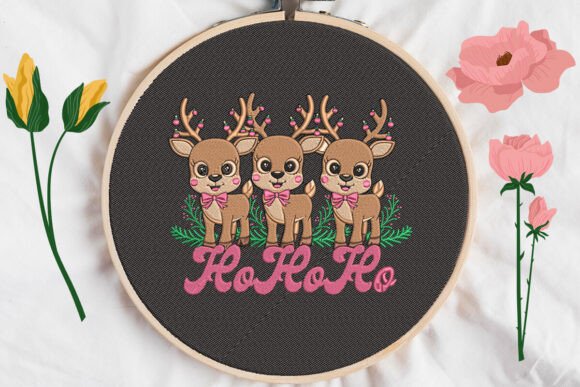
This design works especially well for custom apparel, embroidered patch prep (it scales cleanly down to 3 inches), and holiday embroidery that leans into charm rather than formality. It’s ideal for Etsy sellers offering personalized gifts—think baby onesies with a tiny version centered on the chest, or aprons for bakers who love whimsy. The layout naturally invites pairing: add a simple “Joy” or “Ho Ho Ho” in a clean block font beside it, and you’ve got a cohesive tote bag design or sweatshirt embroidery series without redesigning from scratch.
Where to Pause—and Why
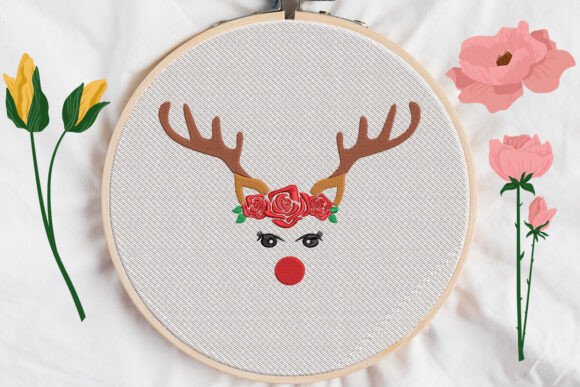
That said, Snowman and Reindeer Winter isn’t magic on every surface. On thin or highly stretchy fabric—like lightweight jersey baby onesies—I’d recommend testing with extra tear-away stabilizer and possibly reducing stitch density slightly in the snowman’s scarf area. Dense fill zones can stiffen delicate fabrics faster than buyers expect. On dark fabric, check your thread colors carefully: light gray or off-white threads may lack enough contrast against navy or charcoal unless you boost brightness in your mockup. And on curved surfaces—like structured caps—the reindeer’s upward-tilted head may require repositioning or slight digitizing tweaks to avoid distortion at the crown seam.
Also worth noting: while the design avoids tiny lettering or micro-details, the snowman’s coal-button eyes and the reindeer’s nostril accents rely on precise running stitch placement. If your machine struggles with fine directional changes or you’re using older thread, inspect those spots on your first test run. They’re charming—but not indestructible.
What It Adds to Your Finished Product
Snowman and Reindeer Winter quietly elevates perceived value. It reads as intentional, not generic—something customers notice and comment on (“Is that custom?” they’ll ask). That builds trust, especially for craft businesses where handmade presentation matters. It also supports brand consistency: whether you’re selling embroidered pillow covers or holiday gift sets, this design feels like part of a thoughtful collection—not a clip-art afterthought. For digital embroidery file sellers, its versatility makes it strong as a standalone asset or as part of a curated Christmas bundle. And because it avoids heavy metallics or complex applique steps, it’s accessible for hobbyists and pros alike—no special hoops, no specialty threads required.
Practical Designer Notes Before You Stitch
- Always test on scrap fabric matching your final project’s weight and stretch—even if it’s “just a towel.”
- Review stitch density in your software: look for overlapping fills near the snowman’s hat brim or reindeer’s shoulder; smooth those manually if needed.
- Confirm hoop size compatibility early—this design fits comfortably in a 5x7 hoop, but double-check before nesting multiple units.
- Use proper stabilizer: medium cutaway for knits, tear-away for stable wovens, and a light film for delicate linens.
- Check contrast in both black-and-white and color printable mockups—some thread shades disappear on busy backgrounds.
- If selling finished items commercially, verify licensing terms for commercial embroidery use—don’t assume resale rights are included.
- For personalized gift listings, pair it with warm, clear product photos showing texture and scale—not just flat digital previews.
Final Thought: A Design That Serves the Maker
Snowman and Reindeer Winter doesn’t shout. It doesn’t need to. It’s the kind of machine embroidery design that supports your process instead of complicating it—clean to digitize, forgiving to stitch, and memorable once finished. Whether you’re an Etsy seller batching holiday orders, a small shop owner refreshing seasonal inventory, or a designer building a library of reliable design assets, this one earns its place not because it’s flashy, but because it delivers—consistently, quietly, and with genuine winter warmth.