Christmas Gift Box
A Whimsical Touch That Actually Works on Real Fabric
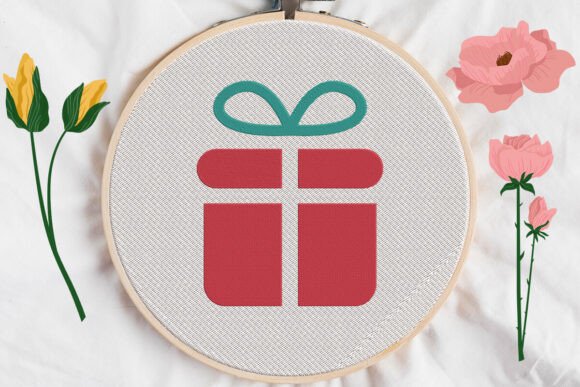
As someone who’s stitched hundreds of holiday designs across sweatshirts, tea towels, baby onesies, and boutique tote bags, I opened Christmas Gift Box expecting charm—but not quite the quiet confidence it delivers. It’s not overly busy or cutesy; instead, it lands with a warm, hand-drawn sincerity—like a carefully wrapped present sketched by a thoughtful friend. The shape is a classic box with a soft bow, subtle ribbon swirls, and gentle dimensional hints—not photorealistic, but full of embroidery-friendly rhythm. No tiny script, no fragile stems, no nested layers begging for rehooping. Just clean lines, intentional negative space, and a layout that breathes on fabric.
Where It Shines: Real Projects, Real Customers
I tested Christmas Gift Box on three very different items: a medium-weight cotton canvas tote bag, a 100% cotton unisex sweatshirt (medium gray), and a linen-blend kitchen towel. On each, it held its personality without overwhelming. On the tote? Instant charm—no extra embellishment needed. On the sweatshirt? It softened the sporty silhouette just enough to feel festive but not costumey. And on the towel? The satin-stitched bow caught light beautifully, while the fill-stitch base stayed crisp after washing. That’s rare. Most holiday machine embroidery designs lose clarity after one cycle; this one kept its shape and warmth.
Etsy sellers and small shop owners will appreciate how naturally Christmas Gift Box supports storytelling. Imagine it centered on a cream-colored baby blanket—simple, gender-neutral, quietly joyful. Or stitched in ivory thread on a charcoal apron for a baker’s holiday gift line. It doesn’t scream “CHRISTMAS!”—it invites. That subtlety builds trust: customers see craftsmanship, not clip art.
Fabric & Fit: Know When to Lean In—and When to Pause
This isn’t a one-size-fits-all embroidery file. Its strength lies in balance—not density, not minimalism, but *intentional* stitch density. That means it performs best on stable, medium-weight fabrics: quilting cotton, twill, terry cloth, linen blends, and midweight knits (with proper cutaway stabilizer). On thin or highly stretchy fabric—like lightweight jersey or rayon challis—I’d hesitate unless adding tear-away + cutaway combo stabilizer and reducing top tension slightly. The bow’s satin stitch areas need support to avoid puckering.
Curved surfaces like caps or low-profile beanies? Possible—but only if your hoop size comfortably accommodates the full design width *plus* ½ inch margin. Don’t force it into a 4x4 hoop if the original layout leans toward 5x7. Check the actual dimensions before hooping. Also: dark fabric demands careful thread color choice. A pale mint or warm beige works better than stark white—it reads as soft, not washed out. Always test on scrap first, especially when pairing with textured weaves like waffle-knit towels or bouclé blankets.
What It Adds—Beyond the Stitch
Christmas Gift Box elevates more than fabric—it lifts perception. Handmade products with this design read as considered, not rushed. Personalized gifts feel more heartfelt. Custom apparel gains quiet sophistication. Even digital product previews (like printable mockups for an Etsy listing) benefit: its clean silhouette scales well, stays legible at thumbnail size, and translates clearly across light/dark backgrounds.
For craft businesses building brand consistency, it’s versatile without being generic. You can pair it with a simple monogram or keep it solo—and either way, it feels cohesive. It doesn’t compete with logos or slogans; it complements them. And because it avoids dated trends (no snowmen wearing sunglasses, no glitter fonts), it holds up season after season. That longevity matters—especially when you’re curating design assets for commercial embroidery or building a repeatable holiday collection.
Designer Notes You’ll Actually Use
- Always stitch a test run—not just on scrap, but on the *exact* fabric + stabilizer combo you’ll use for the finished product.
- Review stitch density visually before sending to your machine. Look for tight clusters where satin and fill stitches meet—those spots may need slight digitizing tweaks if you notice thread buildup or stiffness.
- Check contrast in black-and-white mockups. Does the bow still read as a distinct shape? If not, adjust thread hue or add a subtle outline stitch.
- Confirm hoop size compatibility before listing it as part of a bundle or offering it for client work. Misaligned hoops = frustrated clients and remakes.
- Inspect small details at 200% zoom: Are corners sharp? Is the ribbon loop fully closed? Tiny gaps become visible on finished items.
- Compare performance on light vs. dark fabric—not just for visibility, but for how the design “sits” on the surface. Some fills recede on darks; others pop. Christmas Gift Box tends to hold presence on both, but verify.
- Use appropriate stabilizer: Medium cutaway for knits, tear-away for stable wovens, and fusible + tear-away for nap-heavy fabrics like terry.
- Verify licensing terms before selling physical embroidered patches, finished apparel, or reselling the digital embroidery file. This is non-negotiable for Etsy sellers and small shop owners.
Final Thought: A Design That Serves the Maker First
Christmas Gift Box doesn’t ask for attention—it earns it. It’s the kind of embroidery design that makes your job easier: predictable stitching, forgiving on common fabric types, and rich enough to stand alone but flexible enough to layer. Whether you’re stitching last-minute holiday gifts, prepping boutique inventory, or building a cohesive line of handmade home goods, it delivers consistent, quiet joy—not just seasonal noise. That’s the mark of a truly usable machine embroidery design: it disappears into the project, leaving only warmth behind.