Christmas Leaf Embroidery Design
A Craft Fair Designer’s First Look: Festive, Flexible, and Friendly
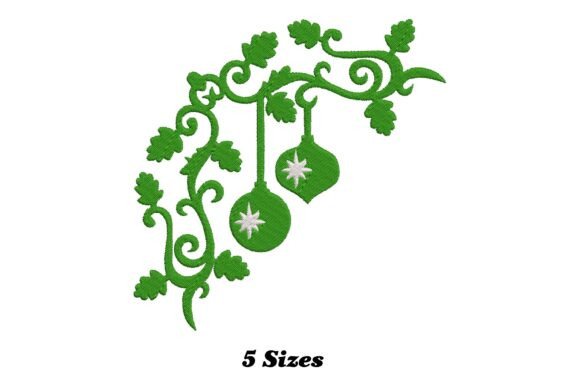
As an embroidery designer who’s packed more than 40 craft fairs—and sold out of handmade aprons at three holiday markets last season—I opened the Christmas Leaf Embroidery Design file with one question in mind: “Will this stop someone mid-aisle?” The answer? Yes—if you place it right. This isn’t a loud, glitter-bombed motif or a cartoonish Santa leaf hybrid. It’s a clean, botanical-inspired Christmas design that leans into elegance without sacrificing warmth. Think farmhouse charm meets modern holiday minimalism: subtle curvature in the leaf veins, balanced negative space, and a shape that reads clearly at both 2” and 6”. It feels festive but not frantic—perfect for buyers who want holiday spirit without seasonal overload.
Where It Shines: Real Craft Fair Product Pairings
In my booth setup, I test every new machine embroidery design across seven high-traffic handmade products: tote bags, aprons, tea towels, embroidered patches, fabric pouches, pillow covers, and market bags. Here’s how Christmas Leaf Embroidery Design performed:
- Tote bag design: A standout on natural canvas or oatmeal linen. Centered on the front panel (3.5–4” wide), it reads beautifully from 6 feet away—no competing text or clutter needed.
- Apron embroidery: Ideal for the chest pocket or lower left corner. Its organic shape softens the utilitarian feel of denim or cotton twill, adding quiet sophistication to kitchen-ready handmade product lines.
- Tea towel embroidery: Works exceptionally well on waffle-weave or flour-sack cotton—but only if stitch density is moderate. More on that below.
- Embroidered patch: Translates cleanly to iron-on or sew-on backing. Clean outer edges and no interior cutwork mean fewer fraying issues during batch production.
- Fabric pouch & pillow cover: Holds visual weight on small-scale items without overwhelming. Especially effective on muted green, cream, or charcoal fabrics where thread contrast lifts the detail.
It’s less effective on curved cap surfaces or dense fleece—unless resized thoughtfully—and doesn’t carry well as tiny lettering or monogram accents. But as a singular, confident motif? It’s booth-ready.
Production Reality Check: What You Need to Test Before Booth Day
This isn’t just about aesthetics—it’s about execution. As a working embroidery designer, I treat every digital embroidery file like a prototype. Before cutting fabric or loading hoops, I always:
- Run a test on scrap fabric matching my intended product (e.g., terry cloth for towels, twill for caps).
- Check thread contrast—especially on dark fabric. Light green or gold thread pops; pale mint can disappear on charcoal linen.
- Review spacing between leaf elements. Tight loops or overlapping stems risk skipped stitches on textured towels or thick stabilizer layers.
- Confirm hoop size compatibility. If the design requires a 5x7 hoop minimum, it won’t fit standard cap frames—so skip baseball caps unless resized.
- Inspect stitch density. Dense fill areas may pucker thin cottons or bleed through lightweight tea towels. A lighter fill or satin-stitch outline often improves drape and durability.
- Use the right stabilizer: tear-away for stable weaves, cut-away for stretchy knits, and heavy cut-away for towels with deep pile.
- Create at least one real mockup—not just a printable mockup. Lighting, fabric drape, and thread sheen change everything in person.
- Compare fabric colors side-by-side. A leaf that looks rich on ivory may read muddy on oatmeal. Always photograph against your actual product palette.
- Verify commercial licensing. If you’re selling finished products—not just the digital embroidery file—you need explicit permission for commercial embroidery use.
Why It Converts: Attention, Value, and Repeat Appeal
At a crowded craft fair, attention spans are short and buyer intent is high. Christmas Leaf Embroidery Design earns notice because it’s instantly legible, emotionally resonant (nature + holiday = timeless), and versatile enough to support cohesive branding. When repeated across tote bags, aprons, and pillow covers in matching thread palettes, it builds booth-wide recognition—without needing logos or slogans. Customers perceive higher handmade quality when motifs are intentional, balanced, and technically refined. That perception lifts price tolerance: a $28 embroidered tea towel feels justified next to a $36 leaf-embroidered pillow cover, especially when both share the same elegant rhythm.
Careful-Use Notes: Where Clarity Can Fade
This design shines brightest when respected—not stretched. Avoid using it:
- Below 2” tall on textured towels—the veins and inner details blur.
- On thick, napped fabrics (like sherpa or heavy fleece) without reducing fill density.
- With ultra-fine thread (60wt+) on dark backgrounds—contrast suffers.
- Without testing on curved surfaces (caps, mugs, curved pouch seams). Distortion can flatten leaf dimensionality.
- As a background repeat pattern. Its strength is singular focus—not wallpaper energy.
If your Etsy seller listings rely heavily on printable mockups, shoot at least one real-life flat-lay with natural light. Digital embroidery files sell better when buyers can *feel* the texture, depth, and scale—not just see the shape.
Final Thought: A Quiet Workhorse for Holiday Season Sales
The Christmas Leaf Embroidery Design won’t shout—but it will linger. It’s the kind of small shop product that gets gifted, reused, and photographed by customers who love subtle storytelling in their handmade goods. For Cricut and embroidery crafters building a holiday collection, it’s a reliable anchor. For boutique makers curating giftable collections, it adds cohesion without cliché. And for anyone preparing a craft fair table this December? It’s the calm, confident centerpiece that makes shoppers pause, smile, and reach for their wallet—not because it screams “Christmas,” but because it feels like home, hand-stitched, and ready for the season.