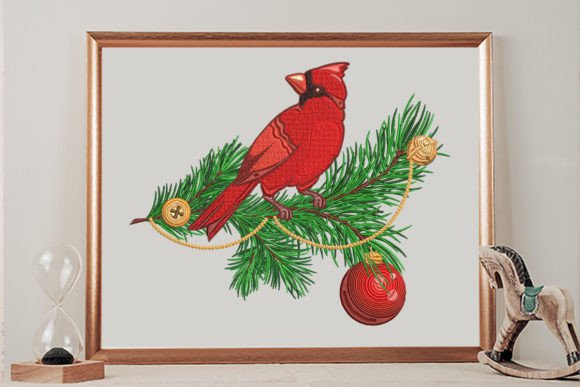
Forest and Deers Christmas
A Practical Review for Small Business Merchandise & Branded Patches
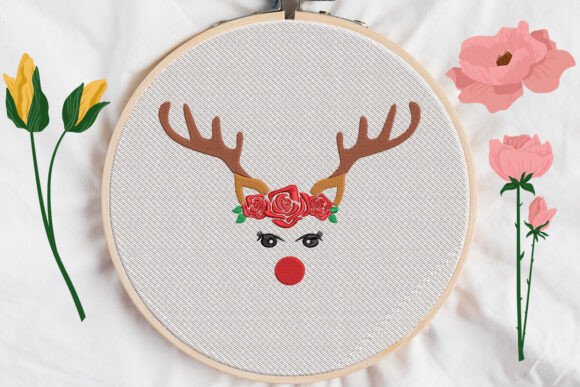
As an embroidery designer who’s developed hundreds of commercial designs for cafés, boutiques, bakeries, florists, and handmade brands, I approach every new machine embroidery design with two questions: Does it translate reliably across real-world products? and Does it strengthen a small business’s brand identity—not just decorate it? When I first saw Forest and Deers Christmas, the title alone evoked warmth, quiet charm, and seasonal sincerity—no glitter overload, no cartoonish exaggeration. That’s promising. The description—“It’s time to get cozy this winter with this super cute embroidery design. Add a dash of Christmas magic to any product”—tells me this isn’t aiming for corporate austerity or maximalist festivity. It’s leaning into handmade product appeal: rustic yet refined, friendly but not childish, festive without being fleeting.
How Forest and Deers Christmas Builds Brand Trust on Real Merch
Small businesses thrive when customers feel connection—not just transaction. A well-executed embroidered patch or chest logo signals care, consistency, and authenticity. Forest and Deers Christmas delivers that. Its natural motif—forest elements paired with gentle deer silhouettes—resonates with local shops that value sustainability, craftsmanship, or nature-based storytelling. Imagine it stitched on:
- An apron for a neighborhood bakery—subtle, warm, and seasonally relevant without shouting “HOLIDAY SALE”;
- A cap front for a florist or outdoor gear shop—clean enough for year-round wear, with Christmas as a soft accent;
- A corner patch on reusable tote bags sold at a boutique or craft fair—elevating perceived value while reinforcing local, artisanal positioning;
- Sleeve embroidery on staff uniforms for a pet-friendly café—friendly, grounded, and quietly joyful;
- A branded product label sewn onto handmade soap wraps or gift boxes—adding tactile distinction in crowded Etsy listings.
This isn’t just decoration. It’s brand identity made stitchable. Customers associate thoughtful details like Forest and Deers Christmas with intentionality—and intentionality builds trust.
Where to Use It Strategically (and Where to Proceed with Care)
Forest and Deers Christmas shines brightest where visual breathing room exists. On tote bag designs, work shirts, or large-apron panels, its organic shapes and implied depth hold up beautifully—even at moderate sizes (3.5"–4.5"). But real-world embroidery demands realism: on curved surfaces like cap fronts or knit beanies, fine antler lines or delicate forest outlines may blur if digitized too tightly. Likewise, high stitch density in dense foliage areas could cause puckering on lightweight cotton or textured linen unless paired with the right stabilizer.
Proceed carefully with:
- Small patch sizes under 2.5"—details may collapse or lose definition;
- Dark uniforms without testing thread color contrast—forest greens or deep browns can recede unless balanced with cream, oat, or charcoal threads;
- Frequent-wash items like kitchen aprons—confirm the digital embroidery file uses secure underlay and satin-stitched edges to prevent fraying;
- Textured fabric such as burlap or heavy canvas—requires extra stabilizer layers and possibly simplified fill areas.
Always test Forest and Deers Christmas on your actual production fabric—not just a swatch book. What looks crisp on screen may shift dramatically once stitched.
Design Notes Every Embroidery Shop & Small Business Should Apply
Before sending Forest and Deers Christmas to the hoop, run these practical checks:
- Test it in black and white first. Does the silhouette read clearly? Are negative spaces balanced? This reveals composition strength before color complicates things.
- Check scalability. Resize the embroidery file down to 2" and 3". Do deer features remain legible? If not, simplify or request a low-detail variant from the seller.
- Review thread color contrast. Pair light-thread versions with dark apparel, and vice versa—avoid mid-tone clashes that mute impact.
- Inspect spacing between elements. Tight antler-to-foliage gaps may merge during stitching; ensure minimum 0.8mm clearance for reliable results.
- Confirm hoop size compatibility. Does the design fit comfortably within your most-used hoops? Oversized files increase re-hooping risk on production runs.
- Create a printable mockup for client approval—showing Forest and Deers Christmas on a realistic tote bag or cap renders expectations accurately and reduces revision rounds.
- Compare it beside other design assets. Does it harmonize with your existing logo, typography, or brand palette—or does it feel stylistically isolated?
- Verify commercial licensing. Ensure the machine embroidery design permits use on merchandise you sell—not just personal projects.
Remember: a beautiful embroidery design only becomes valuable business infrastructure when it’s production-ready, consistent, and aligned with your audience’s expectations.
Final Thought: More Than a Christmas Design—A Brand Moment
Forest and Deers Christmas works because it doesn’t try to be everything. It’s not a flashy centerpiece—it’s a quiet signature. For small businesses building recognition through repetition—staff wearing matching aprons, customers carrying branded totes, gifts wrapped with embroidered tags—this design earns its place by being memorable without being loud, seasonal without being disposable, and handmade in spirit without sacrificing polish. In a market flooded with generic holiday graphics, Forest and Deers Christmas offers warmth with weight. Used intentionally, it doesn’t just mark the season—it reinforces who you are, all year long.