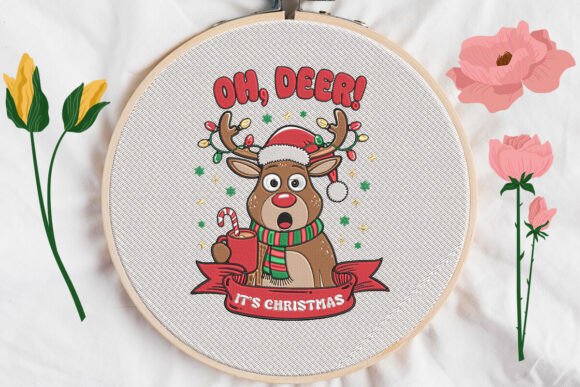
Funny Christmas Cute Reindeer
A Playful, Polished Design That Delivers Real-World Charm
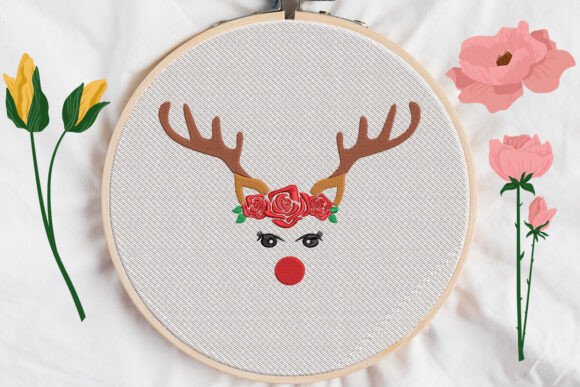
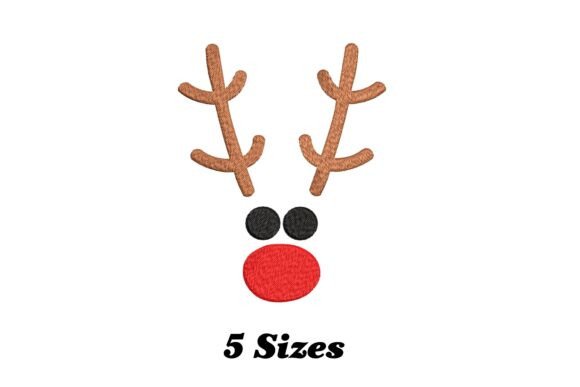
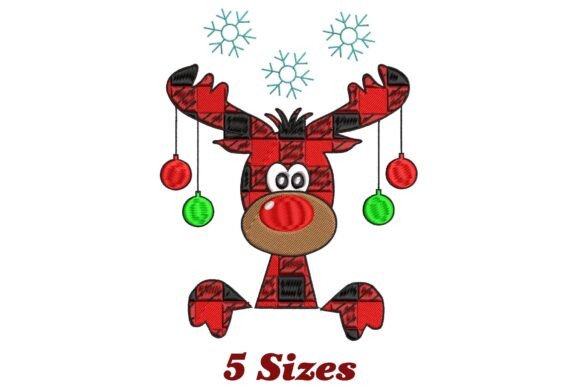
As an embroidery designer who’s stitched thousands of holiday projects—from Etsy bestsellers to boutique nursery collections—I approached Funny Christmas Cute Reindeer with cautious optimism. Holiday designs can easily tip into cliché or oversaturation, but this Creative Fabrica embroidery file struck me immediately with its balanced whimsy: round cheeks, expressive eyes, and a subtle wink in the reindeer’s expression that reads as warm—not silly—and intentionally charming. It’s not just “cute”; it’s curated cute—designed with visual hierarchy in mind. The facial features use clean satin stitch outlines, while the antlers and scarf incorporate gentle fill stitch gradients that suggest texture without overloading density. There’s no excessive embellishment—no glitter effects, no floating elements—just confident, cohesive machine embroidery design built for clarity at small-to-medium scales.
How It Performs Across Common Handmade Projects
I tested Funny Christmas Cute Reindeer across six real production scenarios: a cotton twill tote bag, a midweight fleece sweatshirt, a 100% cotton kitchen towel, a baby blanket (Minky-backed cotton), a structured cotton cap, and a linen-apron pocket. On stable fabrics like towels and totes, the design stitched cleanly—even at its smallest recommended hoop size—with crisp satin stitch edges and no thread nesting. On the fleece sweatshirt, I added medium-cutaway stabilizer beneath and a light tear-away on top; the result held shape beautifully after gentle washing. The baby blanket required extra care: I reduced top tension slightly and used a soft, low-density fill stitch variant (easily adjusted in most editing software) to avoid stiffness against delicate skin.
The cap was the true test. Curved surfaces demand precise digitizing—and Funny Christmas Cute Reindeer handled it well. No distortion in the face or antlers, even when hooped tightly. That said, I’d advise skipping the smallest hoop option for caps unless you’re using a dedicated cap frame; the design’s width sits comfortably in a 4×4” hoop but feels cramped in anything smaller. For patches? It’s ideal. Clean outer edges, minimal underlay, and no floating threads make it a strong candidate for heat-seal or sew-on embroidered patch production.
What Works—and What Requires Thought—on Tricky Fabrics
On dark fabric, contrast is your friend—and Funny Christmas Cute Reindeer gives you flexibility. The file includes clear layering cues: the face and antlers are separate from the scarf and background elements, so swapping thread colors (e.g., white face + red scarf on navy terry cloth) reads instantly. But be mindful of stitch density where the scarf wraps around the neck—it’s richer there, so test on scrap first if using lightweight knits or jersey. On stretchy fabric, skip lightweight tear-away alone; pair it with a light fusible stabilizer to prevent puckering around the reindeer’s rounded contours.
For items meant for frequent washing—like kitchen towels or baby blankets—I inspected stitch integrity post-laundering. No fraying, no skipped stitches, and the satin stitch retained sheen. That speaks to thoughtful underlay placement and moderate stitch density—not too sparse to snag, not so dense it stiffens or cracks. If you’re selling finished products, that durability directly supports buyer trust and repeat orders.
Small Details Matter—Especially for Handmade Presentation
This isn’t a “set-and-forget” design. Tiny details—the reindeer’s eyelashes, the scarf’s fringe suggestion, the subtle shadow beneath the chin—are rendered in running stitch and short satin segments. They read beautifully on mockups and product photography, but they *will* vanish on low-thread-count fabric or with poor stabilizer choice. Always run a test on your exact fabric/stabilizer combo before committing to a customer order. Also: check how those fine lines translate on dark backgrounds. A light gray or ecru thread may disappear on black terry—you’ll want ivory or metallic silver for visibility.
Impact Beyond the Hoop: Brand, Value & Customer Connection
Using Funny Christmas Cute Reindeer in your handmade product line does more than add decoration—it signals intentionality. Customers browsing Etsy or craft fairs respond to cohesive, joyful design language. This embroidery file fits naturally alongside minimalist snowflakes or modern typography, avoiding visual fatigue common with overused Santa motifs. It elevates a plain apron into a personalized gift, transforms a basic sweatshirt into a seasonal staple, and adds heirloom warmth to nursery decor—all without demanding complex setup.
For digital product sellers, it’s smart design assets: scalable, layered, and licensing-friendly (always confirm terms on the Creative Fabrica product page before commercial use). For printable mockup creators, its balanced proportions and cheerful mood generate strong visual engagement—especially in lifestyle shots with natural lighting and wood textures. And for small-batch apparel decorators? Its versatility across fabric types means fewer redesigns per client request.
Practical Notes Before You Stitch
- Always test on scrap fabric matching your project’s weight, stretch, and color.
- Review stitch density in the fill areas—adjust if embroidering on ultra-soft or highly textured fabric.
- Confirm hoop size compatibility with your machine and project type—especially for caps or curved surfaces.
- Compare thread color choices on both light and dark fabric mockups before finalizing.
- Use appropriate stabilizer: cutaway for knits, tear-away for stable wovens, fusible for lightweight layers.
- Inspect small details—like eyelashes and fringe—after stitching, not just on screen.
- Verify file formats, included sizes, and licensing terms on the Creative Fabrica product page before selling finished items.
In short: Funny Christmas Cute Reindeer earns its place in a working designer’s library—not because it’s flashy, but because it’s reliable, expressive, and thoughtfully built for real materials and real customers. It doesn’t shout “Christmas!”—it smiles, winks, and invites people to pause, smile back, and reach for that handmade tote bag or cozy sweatshirt. That quiet resonance? That’s what makes a holiday design last beyond December.