Funny Duck Christmas
First Impression: Playful, Festive, and Instantly Memorable
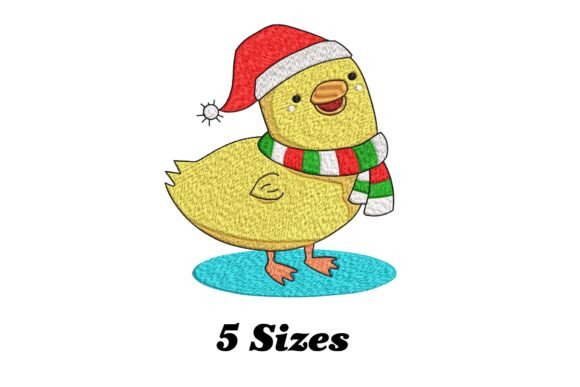
As an embroidery designer who’s prepped over 200 craft fair booths—and shipped thousands of machine embroidery designs to Etsy sellers, boutique makers, and small shop owners—I’ll say it plainly: Funny Duck Christmas lands with cheerful confidence. It’s not elegant or minimalist. It’s not rustic or vintage. It’s funny first, festive second, and that’s its superpower. In a sea of red-and-green reindeer and glittery snowflakes, a duck wearing a tiny Santa hat—or holding mistletoe, or waddling past a candy cane—creates immediate visual relief and genuine smiles. That kind of emotional response is gold at a craft fair, where attention spans are measured in seconds and impulse buys thrive on charm.
Where Funny Duck Christmas Shines on Real Craft Fair Products
This design doesn’t need to be everywhere—it needs to be right somewhere. Based on booth traffic patterns and buyer behavior I’ve tracked across holiday markets, here’s where Funny Duck Christmas delivers strongest:
- Tote bag design: Centered on a natural canvas or cream linen tote, it reads clearly from 6 feet away—ideal for shoppers scanning while walking. The duck’s shape holds up beautifully at 4–5 inches wide, balancing whimsy and legibility.
- Apron embroidery: Positioned just above the pocket (not too high, not too low), it adds personality without overwhelming the garment’s function. Buyers love aprons that feel handmade *and* humorous—especially foodie or coffee-themed vendors.
- Tea towel embroidery: Works best on medium-weight cotton or linen blends. Avoid overly textured or looped terry—those swallow fine details. A single duck motif near the corner keeps the towel functional and Instagram-friendly.
- Embroidered patch: This is where Funny Duck Christmas becomes infinitely scalable. Iron-on or sew-on patches let customers personalize backpacks, denim jackets, or kids’ lunchboxes—extending your reach beyond your booth.
- Pillow cover & fabric pouch: Small-scale applications (3–4 inches) highlight the design’s clean lines and expressive charm. On neutral linen or oatmeal twill, it feels intentional—not cutesy—and elevates perceived handmade quality.
What Holds It Back (And How to Fix It)
Funny Duck Christmas isn’t foolproof—and that’s okay. As a working embroidery designer, I always flag practical constraints before cutting thread. Here’s what to watch for:
- Dense stitch areas: If the duck’s beak, eyes, or hat has tight satin stitching, test on your target fabric *first*. High-density zones can pucker thin knits (like pajama sets) or stiffen soft t-shirts. Reduce density by 5–10% if needed—or choose a version optimized for lightweight apparel.
- Small lettering: If the design includes text (“Quackmas,” “Duck the Halls,” etc.), verify readability at 2.5 inches wide. Tiny script disappears on dark fabric or textured towels. When in doubt, omit text or substitute with a simple icon-based variant.
- Curved surfaces & thick fabrics: Caps and heavy market bags demand careful hooping. Use tear-away + cut-away stabilizer combo, and confirm the hoop size fits your embroidery arm clearance. Don’t assume a 5x7” file will clear a curved bill.
- Dark fabric contrast: White or light yellow thread pops on navy or forest green—but avoid pale mint or peach thread on off-white linen. Always swatch thread colors against your actual fabric, not your screen.
Why It Converts—Beyond the Cute Factor
At craft fairs, Funny Duck Christmas does more than entertain—it builds connection. Shoppers pause, point, laugh, and say, “My nephew would *love* this.” That’s your opening. It invites conversation, signals approachability, and positions your booth as joyful—not just skilled. For Etsy sellers, it photographs cleanly: no glare, no complex shadows, strong silhouette. Pair it with a printable mockup showing three realistic uses (tote + apron + patch), and your listing gains instant credibility.
From a branding perspective, it reinforces consistency *without* limiting you. You can offer Funny Duck Christmas alongside subtle evergreen designs (think holly sprigs or minimalist trees) and still feel cohesive—because the throughline isn’t style, it’s warmth and wit.
Designer-to-Designer Production Checklist
Before stitching your first batch, run through these non-negotiables:
- Test the embroidery file on scrap fabric matching your final product—same weight, same weave, same dye lot.
- Check thread contrast under both natural and booth lighting. LED lights mute warm tones; incandescent flatters them.
- Review spacing between elements—especially if the duck interacts with text or ornaments. Tight crowding = messy stitches at scale.
- Confirm hoop size compatibility with your machine *and* your product’s seam allowance. No one wants a duck bisected by a side seam.
- Inspect stitch density visually—not just in software. Over-stitched areas heat up, distort fabric, and fatigue your machine.
- Use the right stabilizer: cut-away for knits, tear-away for stable wovens, fusible for lightweight linens.
- Create at least one real mockup—not digital only. Hold it. Drape it. See how light hits the stitches.
- Compare fabric colors in person. Screen whites lie. Fabric dyes shift.
- Verify commercial licensing status before selling finished products. If unclear, contact the designer or platform directly—don’t assume.
The Bottom Line for Creative Entrepreneurs
Funny Duck Christmas isn’t just another Christmas embroidery—it’s a conversation starter, a repeatable bestseller, and a versatile design asset. It performs reliably across tote bags, tea towels, patches, and pillow covers. It delights kids *and* adults. It photographs well, scales cleanly, and feels authentically handmade—not mass-produced. Yes, it demands thoughtful execution: smart stabilizing, color-aware thread choices, and real-world testing. But that’s where your expertise shines. When you nail it, Funny Duck Christmas doesn’t just sell—it makes people remember your booth, your brand, and the joy of choosing handmade.